

Social responsibility: In 2024 Axonlab supports the Namutumba Community Hospital in Uganda
- 19.5 Minutes to read
- Written by Fabienne Turrian
- Corporate
Interview with Job Zilaba, Co-Founder of the Namutumba Community Hospital in Uganda
Axonlab (A): Job, tell us your journey in life. You come from Uganda, live and work in in Switzerland and you founded a hospital in your home country Uganda. Can you take us with you on the journey you have been on over the last few years and tell us about the most important milestones?
Job Zilaba (JZ): The journey to establishing Namutumba Community Hospital (NCH) began several years ago when I was working as a social worker in Namutumba District. My role brought me close to the community, especially to women and children, as I addressed issues related to health and education. The most pressing challenge was maternal mortality—mothers were dying during childbirth because the entire district, with a population of over 200,000, had no functioning hospital. Despite submitting proposals to the government for a hospital, we never received a response.
One afternoon, a mother who visited our office went into labor. We arranged for a bike to take her to Iganga Hospital, 40 kilometers away. During the journey, an experienced mother accompanying us realized the baby was in the wrong birthing position, with an arm presenting first. Surgery was the only solution, but the distance and lack of immediate care highlighted the urgent need for a hospital in our community. This moment inspired the idea of Namutumba Community Hospital.
When I shared my vision with my mother, who had faced a similar childbirth situation herself, she immediately donated €5,000 toward purchasing land for the hospital. The community contributed sand and bricks, while I used my salary to buy cement. The promise of job opportunities motivated many community members to volunteer for the project.
In 2010, I moved to Switzerland to join my wife. Despite fears that my absence would halt the project, I remained committed to it. I hoped to find a job and support the community from abroad, but after submitting 450 applications without success, I almost gave up. Then, Inselspital in Bern offered me a position as a nursing assistant in their intensive care clinic. This job became the turning point, allowing me to invest my income into the hospital project.
The journey was not easy. I dedicated my entire monthly salary to the project, took out loans, launched crowdfunding campaigns, and sought sponsorships from my personal network. While many dismissed my dream as impossible, I held onto my belief that it would one day become a reality.
A major breakthrough came when I organized a Ugandan dinner and invited colleagues from work. It was during this event that I received my first significant donation. Prof. Stephan Jakob, director of the clinic, personally donated 40 beds and later coordinated additional funds through Inselspital. These funds allowed us to equip the hospital with a laboratory, an operating theater, and eventually two ambulances. Thanks to this support, Namutumba Community Hospital officially opened to the public, and on the first day, we served over 1,000 patients.
Today, the hospital not only serves Namutumba District but also neighboring districts. We’ve drastically reduced maternal deaths by providing mothers with a nearby, 24-hour healthcare facility, offering an alternative to unsafe home births.
The hospital has also had a transformative economic impact on the community. Land prices have increased, and the hospital has created over 1,000 indirect jobs—supporting motorbike transporters, food vendors, builders, casual workers, and farmers.
Recently, with the support of Axonlab, we acquired infant incubators and radiant baby warmers for our neonatal department. However, challenges remain. Our surgical department currently operates with just one theater, which must accommodate all procedures. When the main theater is occupied, we are forced to set up temporary alternatives, creating significant inconveniences for both patients and staff.
To address this, NCH is seeking financial support to construct four additional operating theaters, complete with recovery rooms. This expansion will allow us to meet the growing demand for surgical services, especially orthopedic procedures, which are increasing due to traffic accidents.
Our journey is far from over, but the progress we’ve made so far gives us hope for the future.
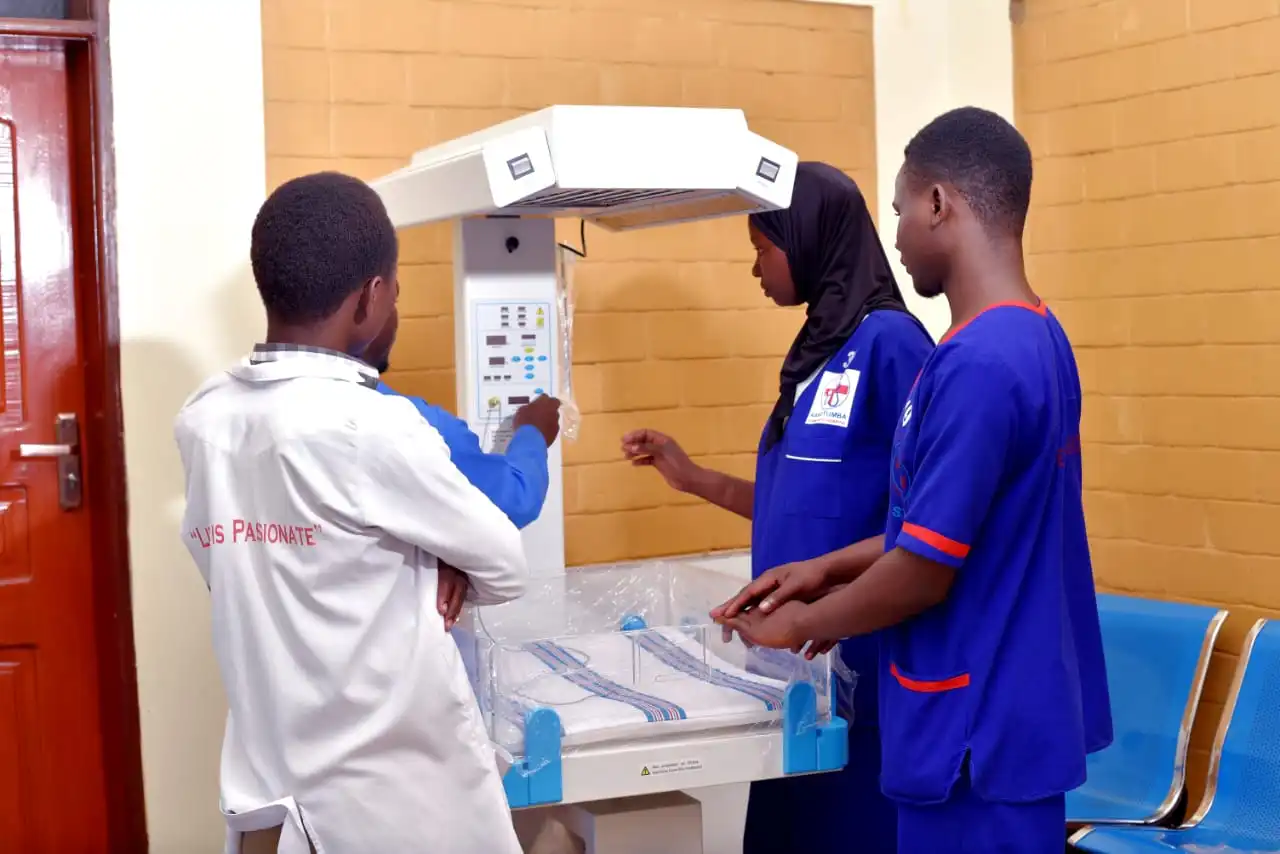
A: How many beds are available in Namutumba Community Hospital?
JZ: Namutumba Community Hospital has a total of 45 beds which are classified under several wards for example: emergency ward, pediatric ward, female and male ward and a maternity ward.
We also offer outpatient services such as dental services, radiology service and ambulance services
A: How many doctors, nursing and administrative staff work at Namutumba Community Hospital?
JZ: Namutumba Community Hospital is covered and supported by a team of 20 medical health workers and 7 administrative and 7 support staff.
A: Is it easy to find new employees for the Namutumba Community Hospital?
JZ: Skilled and experienced employees are relatively easy to find in Uganda, but they come at a cost. At Namutumba Community Hospital, we are financially constrained, which limits our ability to hire the high-quality staff we need.
Currently, we are in urgent need of a full-time gynecologist and pediatrician. However, due to budget limitations, we can only afford to employ both on a part-time basis—just half a day, twice a week. Unfortunately, the income from patient contributions and the few donations we receive from Switzerland are insufficient to run the hospital at the level we aspire to achieve.
A: What are the biggest challenges for the hospital on a day-to-day basis?
JZ: Among the many challenges we face at NCH, limited funding is one of the most significant. Given the rural setting of the community, where most people rely on subsistence farming, they have very little money to spend on healthcare. Around 80% of our patients arrive at the hospital in dire conditions, and while we manage to stabilize their health, many are unable to pay for the services.
This leaves the hospital struggling with financial burdens, such as procuring medications, laboratory reagents, paying staff salaries, and covering water and electricity bills. Additionally, 99% of our patients lack health insurance. To address this, the hospital management is in the final stages of developing a community insurance policy called “LIP,” inspired by our motto: “Life is Passionate.”
A: How often are you on site yourself? What are your tasks when you are on site?
JZ: I fly to Uganda 3 times a year. Besides our online meetings with the boards, there is also need to physically interact with the board, staff and patients of NCH. This helps me to encounter the challenges and difficulties that staff and patients are facing. But of course, I can also learn of the positive things, too. Getting suggestions and ideas from our staff and patients is very valuable to me.
A: You have been working as a nursing assistant at the University Hospital for Intensive Care Medicine in Berne for several years. Can you share your experience of healthcare in Switzerland with Namutumba Community Hospital in Uganda?
JZ: Healthcare in the ICU in Bern is incomparable to the healthcare at NCH. First and foremost, the quality of investment in infrastructure, human resources, and medical equipment is on a level that even the entire country of Uganda, with its population of over 40 million, has yet to achieve.
At NCH, in addition to medical care provided by the healthcare staff on the wards, patient relatives are involved in aspects of care, such as maintaining hygiene. This is a practice you would not find in the ICU in Bern, where all aspects of care—from medical treatment to patient hygiene—are exclusively handled by trained medical staff.
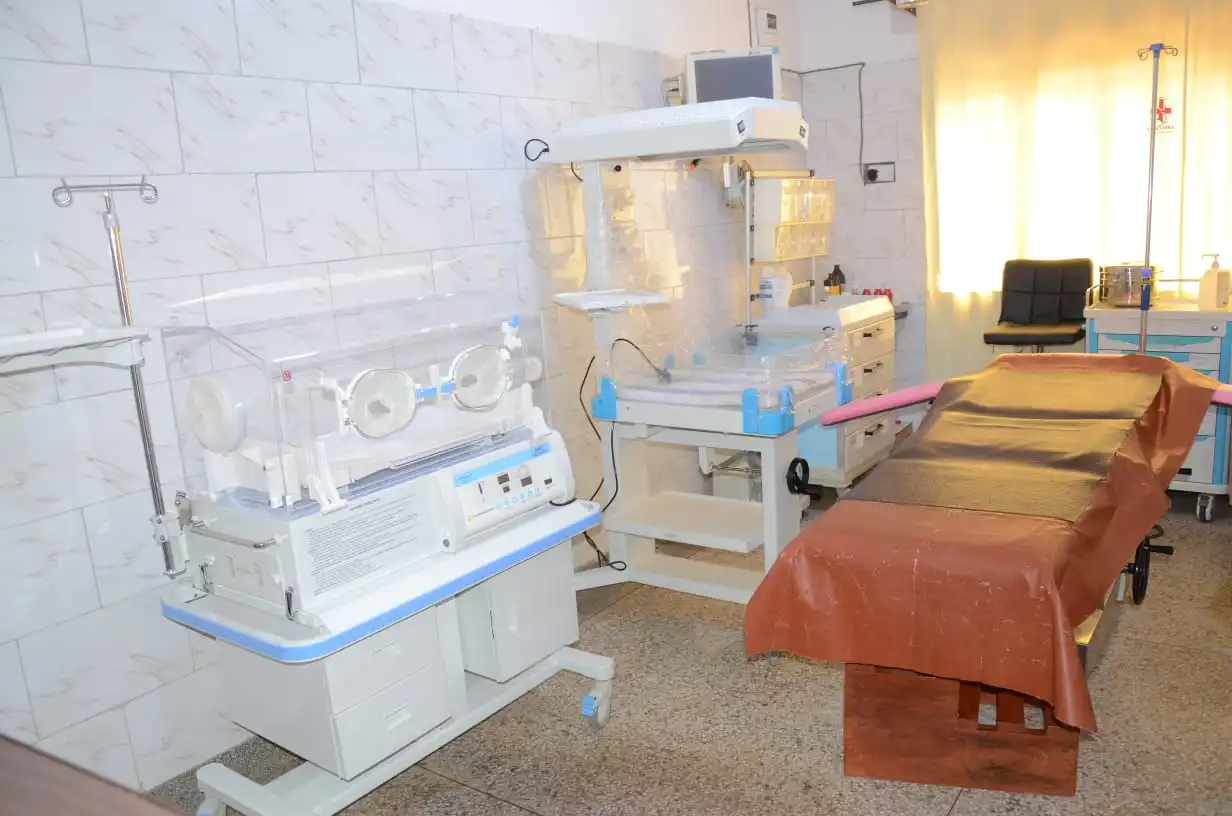
A: Namutumba Community Hospital was openend in Summer 2021. Now, 3 years after the opening, where does the hospital stand? What goals did you set when you opened the hospital and where does it stand today in relation to these goals?
JZ: When we opened the hospital in 2021, our primary focus was the Namutumba district. However, we have been overwhelmed by the increasing number of patients coming from neighboring districts, which speaks volumes about the quality of care and services our staff provide.
Our initial goal was to focus on maternal and child health, malaria, and common infectious diseases. However, over the past three years, we have encountered a wider range of health complications, including diabetes, orthopedic issues, and radiological needs. The original objective was to cater specifically to mothers facing delivery challenges (such as C-sections) and children. In hindsight, we underestimated the scale of the challenges and limited our focus to one district, despite similar health issues existing in other regions.
Today, NCH has drawn the attention of two insurance companies, whose clients include NGO workers within the district. The majority of our patients, however, come from very poor areas where people live on less than a dollar a day. This is why NCH is developing a LIP insurance scheme to support the most disadvantaged members of our community.
A: What has been the best or most impressive experience for you in the last three years since the hospital opened?
JZ: There are 2 and they happened at same time:
Two patients arrived at the hospital at the same time: a mother in labor and a critically ill child in desperate need of a blood transfusion. The child was barely alive. Four hours later, the child was asking for food, and in the maternity ward, the mother was being guided on how to breastfeed her newborn.
I was overwhelmed with joy, so much so that I shouted out loud, “Finally, it’s working!” In that moment, all the years of struggle felt worthwhile. A few years earlier, I could not have imagined saving these three lives: the mother, her newborn, and the child who needed the transfusion.
A: How do you manage to reconcile the two worlds you work in? I imagine that everyday life in a Swiss university hospital is diametrically opposed to everyday life in the Namutumba Community Hospital in Uganda. Or am I wrong and there are definitely similarities?
JZ: To bridge the gap between the two worlds, it’s essential to understand the cultural differences between the two countries. For example, a typical Swiss person might tell you everything is fine, even if they’re visibly hurt or in pain. Often, even with the slightest discomfort, they will promptly see a doctor.
In the other world – Uganda –, it’s quite the opposite. People often wait until their condition has worsened or is already critical before visiting a doctor or hospital. Planning ahead or scheduling appointments is uncommon—patients tend to walk in and expect immediate attention.
In Switzerland, health insurance covers the financial burden of medical bills. In contrast, in Uganda, families are responsible for paying the bills. If they cannot afford to do so, the bill is escalated to my desk for clearance, which ultimately means our association in Switzerland steps in to cover the cost of treatment.
A: What are your wishes for the future of the Namutumba Community Hospital?
JZ: My wish is for NCH to receive more funding and better equipment so that we can provide ICU care to the poor. Currently, ICU treatment in Uganda is only accessible to the fortunate few who can afford it. Being located in the heart of eastern Uganda, NCH serves as a gateway for patients traveling to Kampala to see specialists. If we are well-equipped, we could attract both patients and specialists to NCH, reducing the need for such long journeys.
Additionally, due to our location and the limited medical equipment we already have, students from various institutions have expressed a desire to volunteer at NCH. They are eager to gain experience using rare medical equipment unavailable at their training schools. This opens up the possibility of establishing our own training school in the future, which could also serve as a hub for research and larger laboratory facilities.

For more information about the Namutumba Community Hospital visit www.nch.ug