
Wholeheartedly committed to the cause
- 6.5 Minutes to read
- Written by Axonlab
- General Practice
Worldwide, about one in three deaths is caused by cardiovascular disease - that's an average of about 56,000 deaths a day, or one death every 1.5 seconds. In Europe, this equates to around 4 million deaths per year. The most common disease is probably «heart attack».
The ESC's Fourth Universal Definition of Myocardial Infarction states that a heart attack (myocardial infarction) occurs when the heart muscle (myocardium) is damaged and no longer receives enough oxygen. The most common cause of a heart attack is the partial or complete blockage of a coronary artery or coronary vessel by a blood clot. Immediate vital treatment is given with antiplatelet drugs to dissolve the clot as quickly as possible. A stent can then be inserted through a catheter to reopen the artery and keep it open permanently, or a bypass artery can be created directly during heart surgery.
Reasons for lack of blood flow
Other causes of lack of blood flow to the heart muscle, including true ischaemia, can be infection, sepsis (= 'blood poisoning'), kidney disease, failed heart surgery and strenuous physical activity with a previously damaged heart. The first line of treatment is to remove the cause. Temporary respiratory arrest can also cause significant damage to the heart muscle, and a particular danger is persistent high blood pressure, which indicates existing vasoconstriction and permanently overloads the heart. The lack of oxygen (ischaemia) is detected by an electrocardiogram (ECG) and symptoms such as chest pain, pain in the arms or jaw, shortness of breath and fatigue. However, a heart attack can be virtually asymptomatic, so correct and rapid diagnosis is crucial.
Troponin plays a key role
A cardiac marker called troponin plays a crucial role. Troponin is a protein that the heart muscle normally needs to contract regularly and tirelessly. If the muscle is damaged, heart muscle cells die and troponin is released.
Accurate is good, high sensitivity is better
The European Society of Cardiology (ESC) recommends the use of high sensitivity troponin assays (hs-cTnI) for the early diagnosis or exclusion of acute myocardial infarction (AMI). The hs-cTnI assays detect low levels of troponin at the earliest possible time with high accuracy.
High sensitivity = high accuracy
Patients who present to the emergency department with suspected NSTEMI (non-ST elevation myocardial infarction) are a special case because they have symptoms of a heart attack but the ECG is inconclusive. The high-sensitivity troponin is. High-sensitivity troponin assays are so accurate that they not only measure the lowest concentrations of troponin released during ischaemia, but also detect and quantify troponin levels in healthy individuals. High sensitivity leads to increased diagnostic accuracy, allowing the "troponin-blind" interval and the time to rule in or rule out AMI to be significantly reduced. Fortunately, point-of-care assays are now available that allow rapid troponin determination, for example in the emergency department, without having to wait for results from the central laboratory. However, it is important to read the small print carefully - not every troponin assay is highly sensitive or even sensitive enough. A high-sensitivity troponin assay must be able to measure cTn above the limit of detection (LoD) in ≥ 50% of a healthy population.
Pathfast the right choice
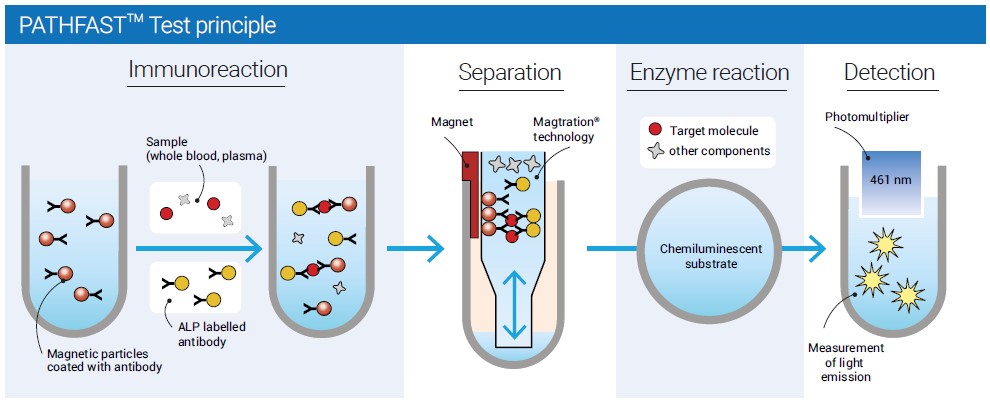
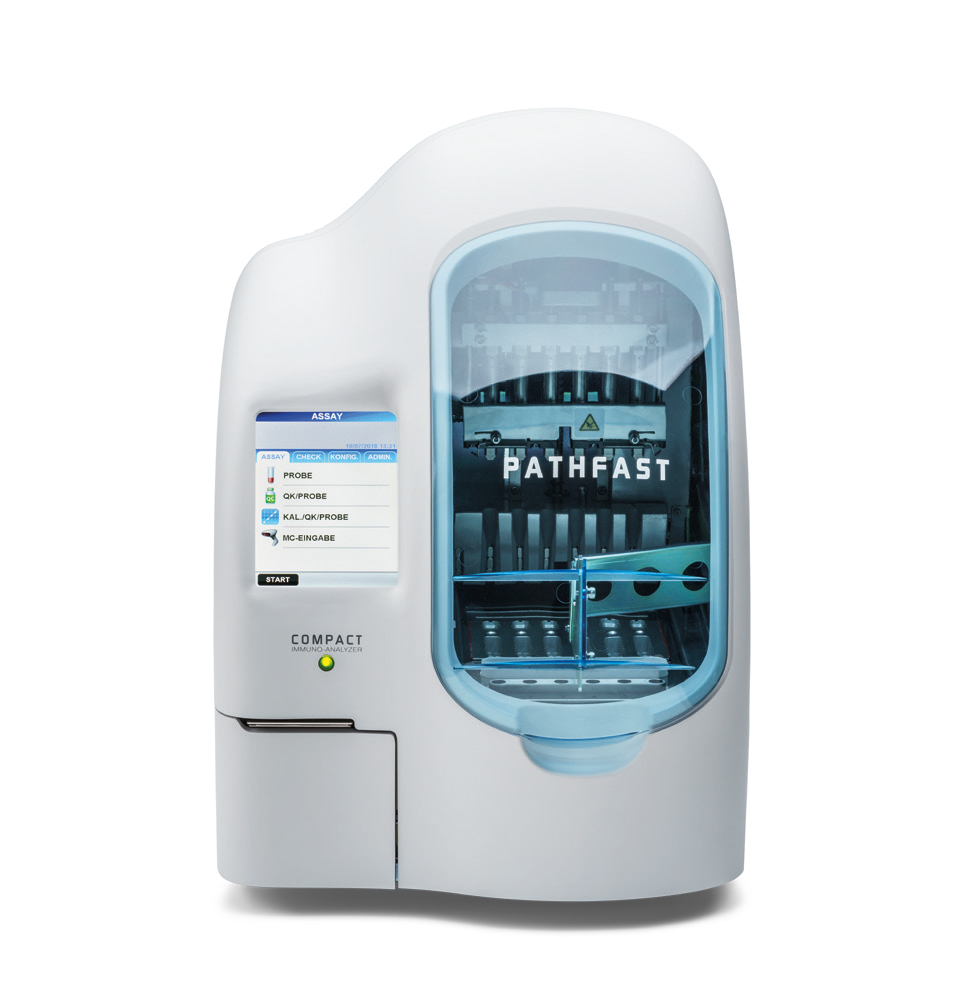
LSI Medience's Pathfast is a true high-sensitivity, point-of-care assay. Using patented Magtration® technology, all relevant cardiac markers, including D-dimer, hs-CRP and the sepsis marker presepsin, can be determined in the same way as in a classical immunoassay.
Targeted follow-up care
Since 1 February this year, the Primary Care Outpatient Clinic at Vienna General Hospital has been using this technology to ensure fast, high-quality patient care. The Primary Care Outpatient Clinic, which is operated by the Vienna Medical Radio Service, relieves the burden on hospital outpatient clinics, especially emergency outpatient clinics, and provides patients with targeted follow-up care.
Sophisticated triage system
This triage system is based on the excellent diagnostics, the outstanding expertise and experience of the outpatient staff and the high-quality equipment, and allows a stronger focus in all areas on what is most essential - the patient.
The primary care outpatient clinic at Vienna General Hospital is open daily from 08:00 to 22:00 and is centrally located next to the main entrance and well signposted.
 |
 |
Sources:
- https://escardio.org/
- https://bhf.org.uk/-/media/files/for-professionals/research/heart-statistics/bhf-cvd-statistics-global-factsheet.pdf
- Pathfast hs-cTnI brochure
- https://world-heart-federation.org/news/do-doctors-really-know-how-to-diagnose-a-heart-attack-new-guidance-from-the-european- society-of-cardiology/
- https://akhwien.at/default.aspx?pid=99&mid=18300&rid=9425
- https://141wien.at/erstversorgungsambulanzen/
- Clinical Applications of Cardiac Bio-markers. IFCC: International Federation of Clinical Chemistry and Laboratory Medicine, July 26, Web. Feb. 14, 2017
- Deutsches Ärzteblatt 2021; 118(41): [4]; DOI: 3238/PersKardio.2021.10.15.01Gimenez, Maria Rubini; Boeddinghaus, Jasper; Nestelberger, Thomas; Twerenbold, Raphael; Müller, Christian.