Annual visit and work assignment at the Albert Schweitzer Hospital in Lambaréné, Gabon
- 10 Minutes to read
- Written by Axonlab
- Corporate
A travel report by Markus Häuselmann, Service Engineer at Axonlab:
«Like every year, we face the familiar challenge before our trip to Lambaréné in 2024: how do we pack our suitcases in such a way that all spare parts and the reagents we order are well distributed and don't immediately catch the eye in the event of a cursory inspection at customs?
The pre-event check-in on Friday evening goes off without a long wait. We even get the popular special seats at the emergency exit. For the 7.5-hour journey from Paris to Libreville, any extra legroom is welcome, especially as the flight is fully booked to the last seat.
On Saturday, our day of arrival, we have an 18-hour journey ahead of us. We get up at 4.15 am in Switzerland and finally arrive at the hotel in Libreville, the capital of Gabon, at 10.15 pm.
Even though the flight itself doesn't actually take that long, the journey time with transfer time (over 4 hours), delays and waiting time at customs quickly adds up to almost 20 hours. The positive side effect of extensive visa formalities is that so much time passes that even the customs officials get tired and prefer their air-conditioned office to a baggage check. Fortunately for us, this means free import without unnecessary discussions.
When we arrive at our hotel in Libreville, the kitchen is already closed. So instead of dinner, we only have a goodnight beer, but at least we have one. We are looking forward to this year's Gabon adventure and fall into bed tired.
As always, the following day is reserved for another trip to the airport. SIM cards are available there, which we need for good communication with our local contacts. Luckily, the money exchange counter is also open and we can change the cash we need straight away. We also buy some drinking water - we still remember last year when we brushed our teeth with tap water...
On Monday, the taxi driver for our journey to Lambaréné arrives on time with a pick-up truck with a loading bridge for our luggage. This is practical and comfortable (more space for us passengers in the vehicle) until it starts to rain. Transporting luggage without a cover in heavy rain is not a good idea. So we put our luggage in the driver's cab and the comfortable space is gone.
After moving into the accommodation in Lambaréné, we start taking stock of the work in the various departments of the Albert Schweitzer Hospital. A brief welcome talk with the hospital director is also a must. He seems very tired this year and is retiring early at the end of the year. He has held his position for five years, something that many of his predecessors have not managed to do. Let's see who we meet next year.
In the evening, we had planned to go to the centre of Lambaréné to eat grilled fish. However, due to extremely heavy rainfall, we were unfortunately unable to leave the hotel. We were lucky that the people in charge at the hotel had bought food for the hotel restaurant, which is not a given here.
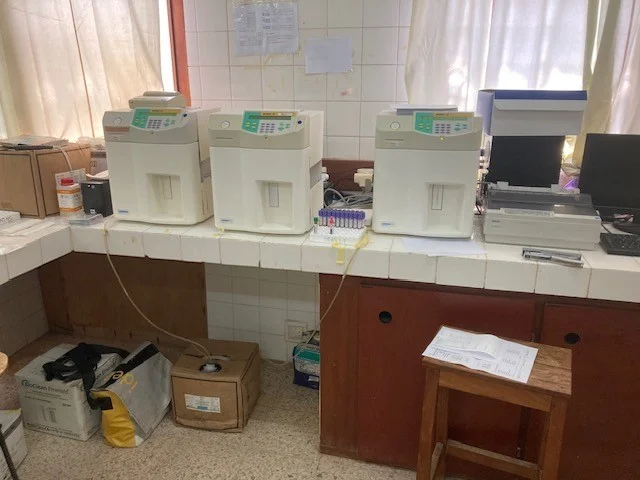
On Tuesday morning, my colleague Marco and I set to work separately. Marco starts with the Micros 60 in the hospital and I begin with the two Yumizen H500s, which have been out of action for some time due to breakdowns. I can repair the first device relatively quickly, as the breakdown was indirectly caused by user error. This means that we will have to train all users again. Thankfully, I have the necessary spare parts with me to repair the second device, so that it is also up and running again.
The challenge of working in a "supercooled" laboratory is far greater than the repairs. We cough and sneeze, but the temperature of the air conditioning remains set at 16 degrees Celsius. After an hour's work in the cold at the latest - equipped with a jacket and clammy fingers - it's time to warm up outside at over 30 degrees centigrade. But after just a few minutes, the sweating starts and we return to the cool laboratory.
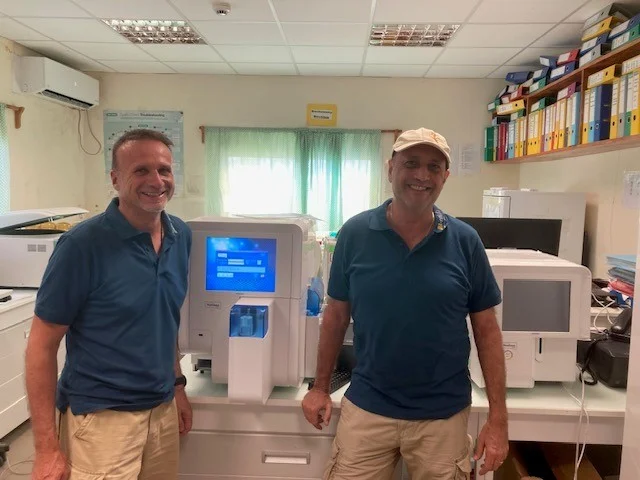
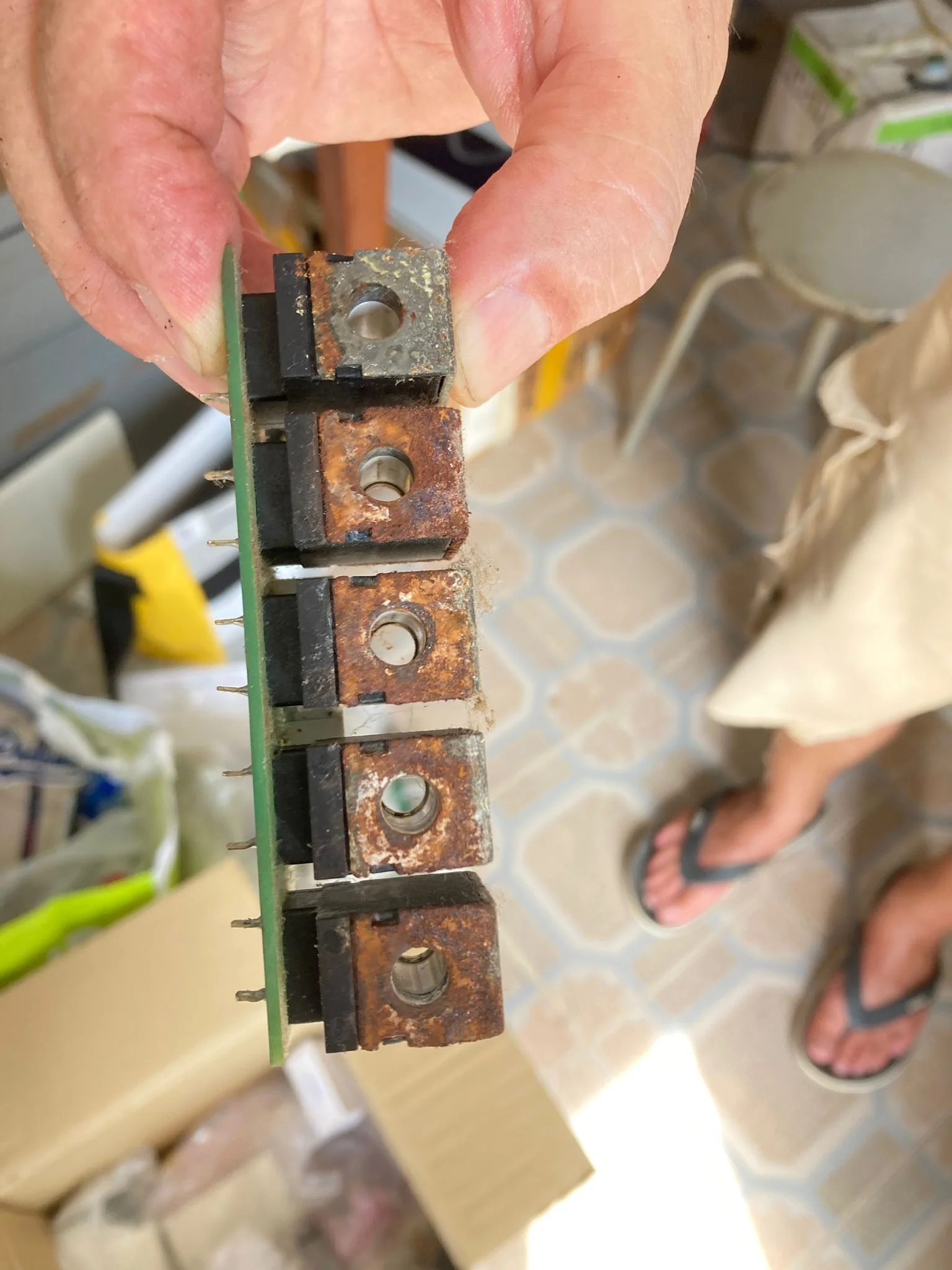
We make good progress with our work over the next few days and are able to repair and maintain one device after another. We are lucky to have the right spare parts with us. However, Marco has a real problem on his hands. One of the three Micros 60 was stored in a storeroom as a spare device. The device is full of mice droppings and the measuring chamber is no longer usable due to pieces of rust that have fallen off the measuring chamber cover. Fortunately, thanks to the right spare parts, which we have in sufficient quantities, we can also overcome this situation.
The exciting part of our mission in Gabon begins on Friday: we travel to Fougamou, Dr Pierre-Blaise's outpost.
The laboratory in Fougamou had to close temporarily due to illness and the equipment was exposed to enormous heat and high humidity for several months.
The laboratory has neither air conditioning nor a fan and we really work up a sweat. It almost makes you wish you were back in the cold lab at the Albert Schweitzer Hospital... We sweat so much that we have to keep drinking water to maintain our water balance.
Unfortunately, we are not quite as successful as in Lambaréné in repairing the equipment here in the laboratory at the outpost. The rust has taken its toll on the instruments - at some point, every piece of equipment comes to an end... In the near future, we will see which devices we can replace if necessary.
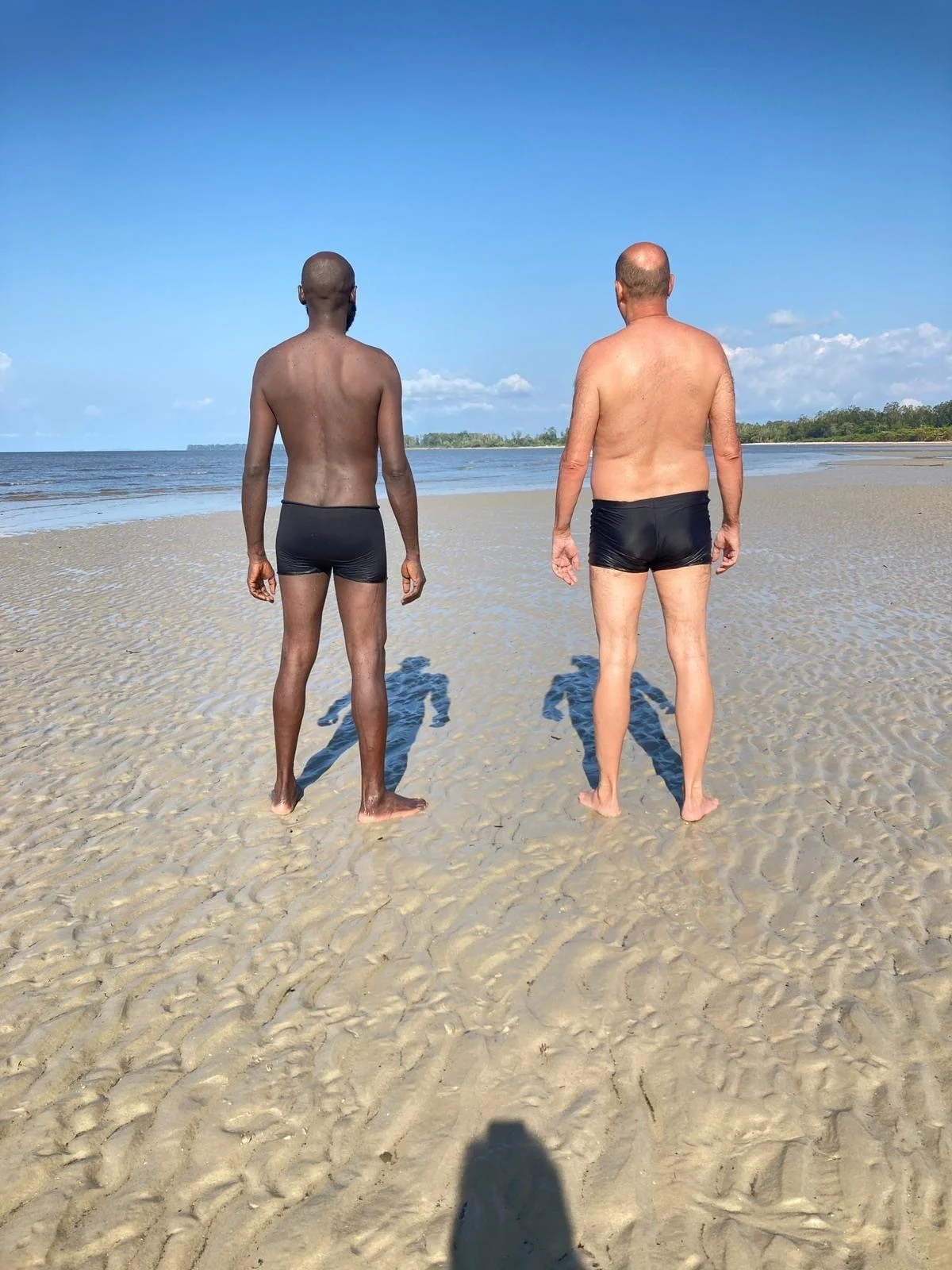
On Sunday, we take a day off work and enjoy the day with a refreshing swim and a cold beer. The number of friends also increases every year.
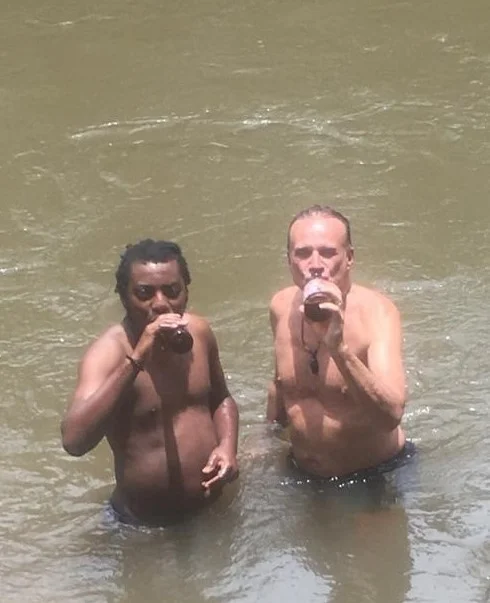
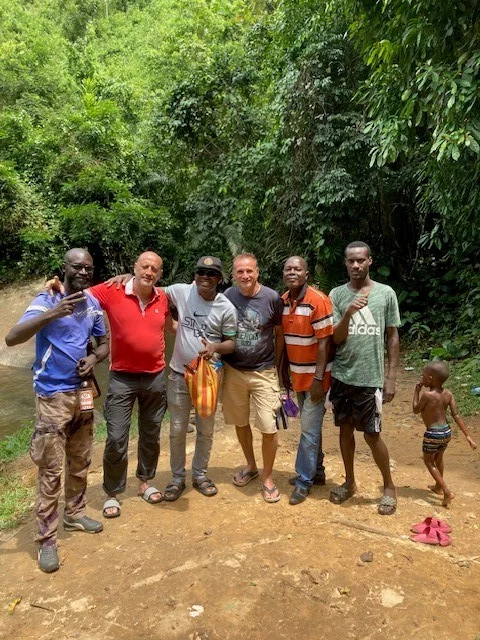
On Monday, we travelled on to Sindara, another C.E.R.M.E.L. branch, which is involved in research into a malaria vaccine.
Air conditioning has recently been installed in this laboratory, which finally makes work bearable. We even manage to convince the locals that 22 degrees Celsius is a pleasant working temperature.
Back in Lambaréné, I get to work on the updates for the HemoScreens. With the exception of one device, an older model with Windows 7, which they didn't get from us, everything went smoothly. After I got the go-ahead from our product manager for the device to install the latest software version, all the devices are up to date. I was also able to get the older model under control thanks to WhatsApp phone support from an Axonlab technician colleague in Switzerland.
The laboratory staff in Lambaréné had installed the diagnostic equipment in a bus so that they had a mobile laboratory at their disposal for travelling to the remote villages. An excellent idea! However, we recommended that they transport the devices in well-padded boxes in the bus and only set them up for use on site. For the onward journey, we recommend taking the devices down and packing them safely back into the boxes. There are simply too many potholes on Gabon's roads for permanently mounted devices in a mobile laboratory.
After the final training sessions and device inspections, we organise our return transport to Libreville. Before the return flight, we treat ourselves to a short break with a trip to Cap Estrellas outside Libreville.»
Connecting ideas. We bring together what creates value, including friendships worldwide.