

CRP – a biomarker of viral and bacterial infections
- 4.5 Minutes to read
- Written by Axonlab
- General Practice
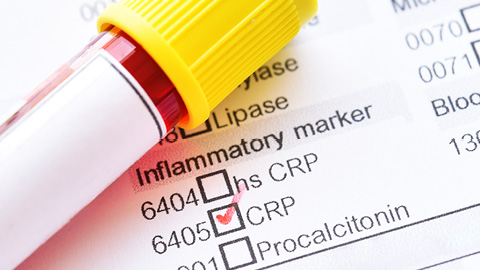
The clinical presentation of a viral infection is often identical to that of a bacterial infection, so the identification of a biomarker that could help the clinician to decide whether or not to initiate antibiotic treatment is therefore crucial.
A biomarker is defined as an objectively measurable element and indicator of a biological process or the pharmacological response to a therapeutic intervention. Examples include: leukocyte count, neutrophil differential, sedimentation rate and c-reactive protein.
C-reactive protein (CRP) is currently one of the most commonly used biomarkers as a diagnostic aid.
CRP, the first identified acute-phase protein, was isolated for the first time in 1930 in the serum of patients with a pneumococcal infection. Its name is due to its ability to precipitate the C-polysaccharide of pneumococcus. It is primarily synthesised by the liver and, to a lesser extent, by adipose tissue cells. Its secretion is stimulated by the increase in interleukin-6 (IL-6), IL-1β and tumour necrosis factor-α (TNF-α). In the acute-phase reaction, CRP values rise by 6 hours and peak at 48 hours. The half-life is around 8 hours and remains constant under all conditions; as a result, the only determinant of circulating CRP concentration is the rate of synthesis, with a rapid decrease in concentration when the production stimulus ceases. CRP is an early and sensitive marker whose levels increase rapidly in response to an inflammatory reaction of any origin (bacterial, viral or fungal infections, allergic reactions, tissue necrosis, trauma or malignant diseases).
The normal level of CRP is less than 5 mg/litre. A level higher than 100 mg/litre signifies a high probability of bacterial infection. A level lower than 20 mg/litre instead indicates a viral infection that does not warrant antibiotic therapy.
For intermediate figures, it all depends on the clinical context and it is often wise to carry out a CRP test 6 to 8 hours later.
Obviously, in most cases, the doctor prescribes additional tests as soon as the CRP is too high in order to refine the diagnosis and establish the right treatment.
CRP also plays an important role in the immune response. It effectively allows the mobilisation and activation of leukocytes (or white blood cells), as well as the stimulation of phagocytosis, a well-known process of cell destruction.
White blood cells are a diverse group of cells that originate from different precursor cells. Although the functions specific to each category of white blood cells are very diverse, all aim to defend the body against external agents in the broad sense.
Simultaneous measurement of CRP and leukocyte parameters can therefore be useful for
a differential diagnosis between bacterial and viral infections.
Indeed, the improved and more precise evaluation of the immune response makes it possible to target the treatment and the prescription of antibiotics.
Our Microsemi CRP LC-767G device, which combines the simultaneous measurement of blood count and CRP, is therefore perfect for establishing these diagnoses.
A single 18 μL microsample of whole blood allows these results to be obtained in 4 minutes for rapid diagnosis.