

Diagnostics and monitoring with hs-troponin, D-dimer, and NT-proBNP
- 11.5 Minutes to read
- Written by Axonlab
- General Practice
Fast, precise diagnostics are essential tools of modern medicine for optimizing patient care, and biomarkers such as troponin, D-dimer, and NT-proBNP play a key role here. In this article, we will provide a detailed look at what these markers mean and how they work. We will be paying special attention to the release of troponin, to the potential causes underlying elevated values, and to the latest guidelines and diagnostic devices for making well-grounded decisions.
Troponin
Release and causes of elevated values
Troponin is a protein found in all striated muscles. Cardiac troponin, which consists of the troponin T and troponin I subunits, is specific to heart muscle and structurally distinct from the troponin found in skeletal muscle. The protein is released into the blood in response to damage or destruction of heart muscle cells. This makes elevated cardiac troponin a highly specific marker of myocardial damage; various conditions could cause this.
1. Acute myocardial infarction (AMI)
- Mechanism: An acute disruption to the blood flow, usually caused by coronary thrombosis. This results in ischaemia, cell death, and, consequently, to the release of troponin.
- Characteristics: Rapid, highly dynamic increase that can be reliably detected or ruled out using diagnostic devices supporting the 0/1-hour algorithm.
2. Heart failure
- Mechanism: Chronic pressure or volume overload can result in gradual damage to heart muscle cells.
- Characteristics: Persistent, moderately elevated troponin values; dynamics are less pronounced.
3. Myocarditis
- Mechanism: Inflammation of the heart muscle caused by viral or bacterial agents or by an autoimmune response; inflammation leads to cell damage and troponin release.
- Characteristics: Variable troponin values, frequently accompanied by symptoms such as chest pain and fever.
4. Kidney failure
- Mechanism: When their function is limited, the kidneys may no longer adequately remove troponin from the blood, causing its value to rise – even when no acute heart damage has occurred.
- Characteristics: Chronically elevated values; dynamics are not significant.
5. Additional causes
- Hypertensive crisis: Sudden spikes in blood pressure put a strain on the muscles of the heart.
- Sepsis: Systematic inflammatory responses can damage heart muscle.
- Trauma or surgical procedures: Direct or indirect damage to the heart causes troponin to be released.
Diagnostic algorithms and guidelines
Quickly and reliably ruling out or ruling in an AMI in a patient continues to be a crucial challenge for medical professionals. An electrocardiogram (ECG), cardiac troponin values, and the clinical presentation of the individual to be treated are the three cornerstones of a diagnosis. While the ECG is the diagnostic tool of choice for identifying an ST-elevation myocardial infarction (STEMI), troponin levels are the key to diagnosing a non-ST-elevation myocardial infarction (NSTEMI). The introduction of high-sensitivity (hs) troponin assays has made it possible to detect very low concentrations of troponin in the blood, thus improving diagnostic accuracy. The use and benefits of these novel assays have recently been the subject of numerous international studies. A major focus of these papers has been the development of algorithms for quickly and reliably ruling out an AMI.
For fast, reliable diagnoses, the European Society of Cardiology (ESC) recommends using the 0/1-hour algorithm, which involves testing the affected individual’s cardiac troponin levels upon admission (0 h) and again after one hour (1 h) if the first value does not unambiguously rule out or confirm an acute myocardial infarction (AMI). Assessing troponin dynamics will either allow physicians to make a fast diagnosis or possibly reveal the need for more differential diagnostic tests.
The following diagram illustrates the 0/1h algorithm when using the Triage® MeterPro:
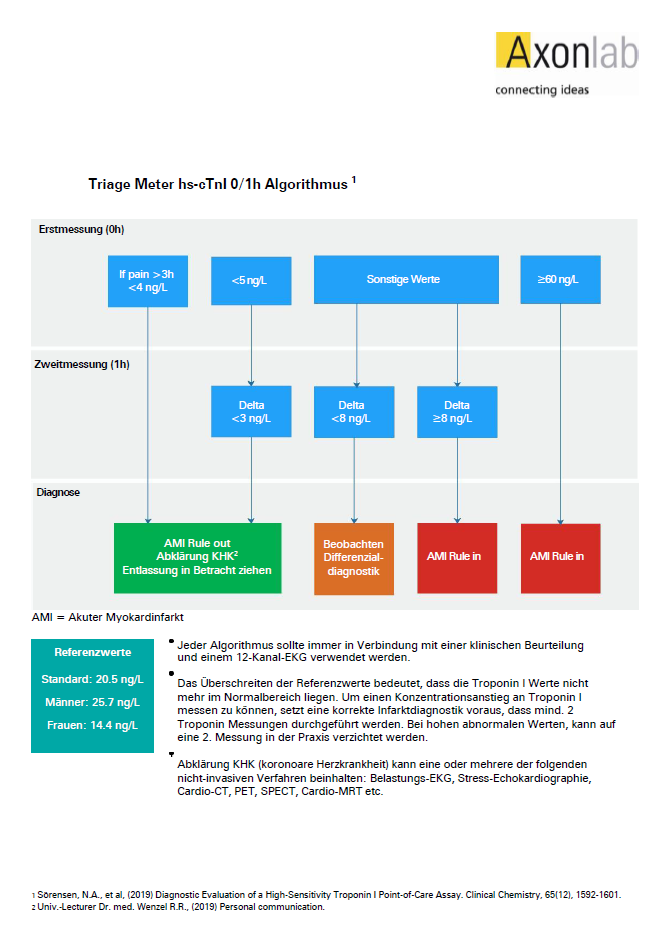
Figure 1: 0/1h approach using the example of the Triage® MeterPro.
In Switzerland, diagnostic analysers that support the 0/1-hour algorithm and have extremely low detection limits (0.1 ng/l for the Triage® MeterPro and 2.33 ng/l for PATHFAST™) offer a reliable basis for diagnosing AMI quickly and precisely.
D-dimer
Diagnostic relevance for thrombotic disorders
D-dimer is a fibrin degradation product that appears when fibrinolysis is activated following blood clot formation. Because testing is highly sensitive, D-dimer is primarily used for ruling out a venous thromboembolism (VTE). A negative D-dimer test has a high negative predictive value, whereas elevated levels are non-specific and could have a variety of causes.
Diagnostic application and indications
D-dimer measurements are particularly valuable in the following clinical applications:
- Ruling out a deep vein thrombosis (DVT) or pulmonary embolism (PE) in patients with a low or medium clinical risk
- Diagnosing disseminated intravascular coagulation (DIC), where elevated values serve as a diagnostic criterion
- Stratifying risk in COVID-19 patients, because elevated D-dimer values are associated with severe disease and increased mortality
Cut-off values and age-adjusted thresholds
The standard cut-off for D-dimer is generally 500 µg/l FEU (fibrinogen equivalent units) or 0.5 mg/l DDU (D-dimer units). Specificity can, however, decline in older patients, because levels rise even in the absence of thrombotic events. For this reason, the age-adjusted cut-off is frequently used for affected individuals over the age of 50:
- Age × 10 µg/l FEU (e.g., 70 years = 700 µg/l FEU)
Gender-specific cut-off values may also be used in patients with a suspected pulmonary embolism (PE):
- Women: 750 µg/l FEU
- Men: 500 µg/l FEU
Limitations and alternative causes of elevated values
Elevated D-dimer values are not specific for thrombosis, as they can be high in other clinical situations as well, such as the following:
- Infections and inflammations (sepsis, pneumonia, COVID-19)
- Malignancies, especially solid tumours or haematological neoplasms
- Pregnancy, especially in the third trimester
- Post-operative conditions, especially after major surgery
- Liver disease, as dysregulated synthesis of coagulation factors can exacerbate fibrinolysis
D-dimer and pre-analytical factors
- False high values can be caused by haemolysis, lipaemia, or insufficient blood sample size.
- Because the half-life of D-dimer is 4 – 8 hours, persistently elevated values can indicate a prolonged coagulation process.
NT-proBNP
Biomarker for heart failure and stress on the heart
NT-proBNP is the N-terminal degradation product of brain natriuretic peptide (BNP) and is synthesized primarily in the cardiomyocytes of the ventricles. An important biomarker for diagnosing heart failure, NT-proBNP is released in response to myocardial stress or elevated cardiac wall tension.
Diagnostic significance and indications
NT-proBNP is used in various cardiovascular contexts—particularly in the following:
- Distinguishing between cardiac and non-cardiac causes of dyspnoea
- Enabling early detection and risk stratification in patients with acute or chronic heart failure
- Evaluating patient prognosis following a heart attack
- Monitoring treatment in patients with heart failure disorders, because lowered values suggest that treatment has been successful
Cut-off values for acute and chronic heart failure
Cut-off values vary depending on the clinical situation:
- Acute heart failure:
- <50 years of age: >450 pg/ml
- 50 – 75 years of age: >900 pg/ml
- >75 years of age: >1800 pg/ml
- Chronic heart failure:
- General cut-off: >125 pg/ml
Clinically relevant heart failure can be ruled out to a high degree of probability when values fall below these cut-offs.
Age- and gender-specific differences
- NT-proBNP values are physiologically higher in older patients, even in the absence of heart failure.
- NT-proBNP values are generally higher in women than in men, which may be influenced by hormonal factors.
- Kidney failure can also elevate NT-proBNP values, as the condition can impact renal clearance.
Differential diagnoses for elevated NT-proBNP values
Heart failure is not the only condition that can be indicated by elevated NT-proBNP values; the following factors can influence levels of this biomarker as well:
- Acute myocardial infarction or unstable angina pectoris
- Atrial fibrillation or other tachycardia arrhythmias
- Pulmonary diseases (pulmonary embolism, COPD, pulmonary hypertension)
- Severe kidney failure, as NT-proBNP is eliminated through the kidneys
- Sepsis and systemic inflammation, which can result in myocardial dysfunction
NT-proBNP in treatment monitoring
NT-proBNP can be used for managing heart failure treatment, especially for controlling medication dosages:
- Falling values suggest that treatment with diuretics, ACE inhibitors, or beta-blockers has been effective.
- Persistently high values indicate that treatment has not been sufficient or that heart failure is progressing.
Proper use of biomarkers such as troponin, D-dimer, and NT-proBNP is an essential component of modern diagnostics. In addition to applying up-to-date ESC guidelines, selecting the proper diagnostic devices can play a key role as well, as these can enable precise, efficient clinical decision-making. In an age when timely diagnosis can mean the difference between life and death, diagnostic innovations are indispensable.
Sources:
- Boeddinghaus, J. (2016). Exclusion of acute myocardial infarction using high-sensitivity troponin I: A direct comparison of four strategies. German Society of Cardiology – Heart and Circulatory Research e.V. Retrieved on February 27, 2025, from
https://dgk.org/daten/Boeddinghaus-Strategien-TroponinI.pdf - Müller, C., & Twerenbold, R. (2017). 0/1-hour algorithm for suspected myocardial infarction. Universimed. Retrieved on February 27, 2025, from
https://www.universimed.com/ch/article/kardiologie-gefaessmedizin/stunden-algorithmus-bei-verdacht-auf-myokardinfarkt-2114477 - Updated ESC guideline: Acute coronary syndrome – what’s new. (2024). Allgemeinarzt Digital. Retrieved on February 27, 2025, from
https://allgemeinarzt.digital/medizin/herz-gefaesse/aktualisierte-esc-leitlinie-akutes-koronarsyndrom-das-ist-neu/ - D-Dimers. (2023). DocMedicus Health Encyclopedia. Retrieved on February 27, 2025, from
https://www.gesundheits-lexikon.com/Labormedizin-Labordiagnostik/Blutgerinnung/D-Dimere - NT-pro BNP – Risk assessment of heart failure. (n.d.). IMD Berlin. Retrieved on February 27, 2025, from
https://www.imd-berlin.de/fachinformationen/diagnostikinformationen/nt-pro-bnp-risikoeinschaetzung-der-herzinsuffizienz